Bowie, Maryland
Stucco Painting in Bowie, MD
Stucco Painting in Bowie, Maryland, with published price ranges up front, the surfaces measured and the prep scope settled on site, and one written figure before any work begins.
Bowie, Maryland
Stucco Painting in Bowie, Maryland, with published price ranges up front, the surfaces measured and the prep scope settled on site, and one written figure before any work begins.
Stucco changes the look of a house more completely than almost any other surface when its color is renewed. It also hides its problems politely. Hairline cracks web across a gable for seasons before anyone notices from the ground, and faded patches spread so evenly that owners adjust to a washed out facade.
We paint stucco across Bowie, where it appears as main cladding on some homes and as sections paired with brick or siding on many newer builds around Pointer Ridge and Fairwood.
Hairline cracks are stucco being stucco. The surface is hard and thin, the house behind it moves with temperature and settling, and fine cracks map that movement. Most are cosmetic and take a flexible coating well. Wider cracks, and cracks returning in the same place after past repairs, point to movement worth understanding before painting over it.
Stains carry messages too. Rust colored streaks below a fixture suggest metal bleeding into the surface. Dark trails under window corners show where water concentrates and runs. Green films on shaded stucco, common under Bowie tree cover, are mildew feeding on surface dirt.
Stucco needs a coating that can stretch. Elastomeric exterior coatings are built to bridge hairline cracks and flex as the wall expands in summer heat and contracts on winter nights, a daily cycle in Maryland. A rigid coating cracks along with the surface beneath it, then peels at the edges where water gets in.
Texture handling matters just as much. Stucco has a deep, varied grain, and thin paint can starve on the high points while pooling in the low ones. Proper application works coating into the texture fully, often with back rolling after spraying, so coverage stays even and the character of the stucco survives.
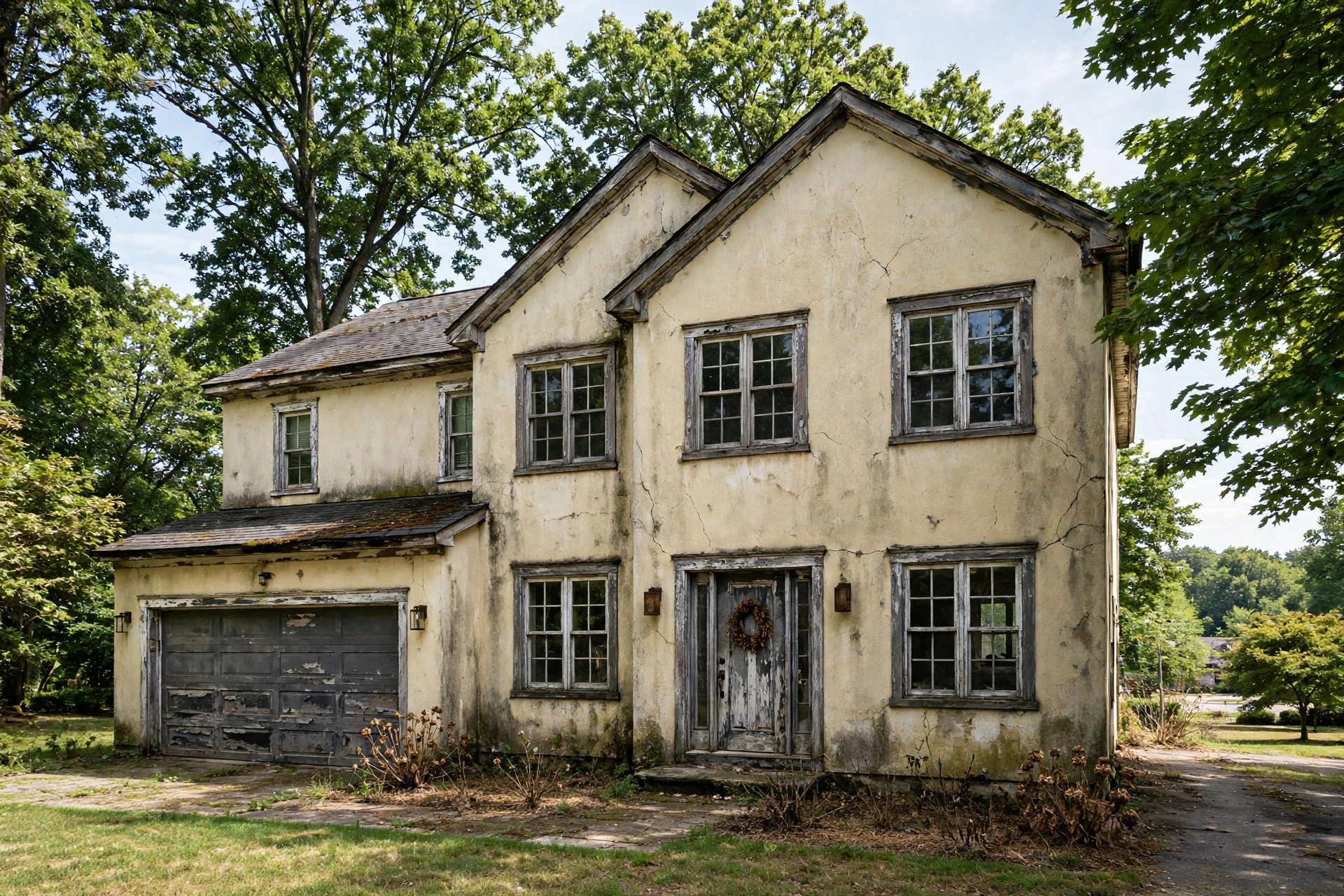
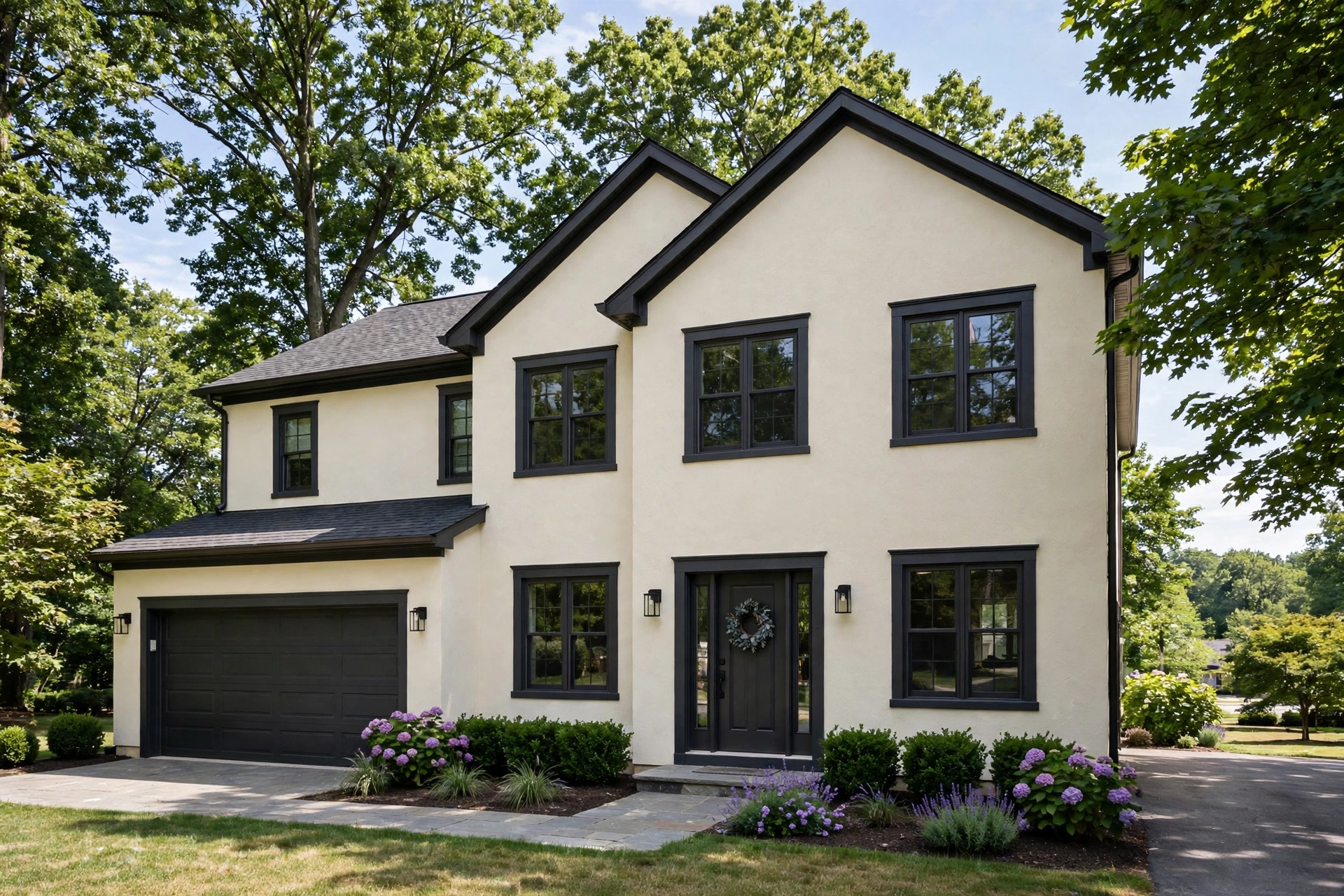
A stucco home in Pointer Ridge had faded unevenly, with the west gable bleached pale while the shaded front carried mildew film and hairline cracks around the upper windows. We washed the full exterior, treated the mildew, and sealed the crack pattern with flexible filler worked into each line. An elastomeric coating system went on in two coats with back rolling to fill the texture, bringing every elevation back to one even color.
Figures for planning come from published figures, labeled as such, because no Bowie company publishes a local price list. Published figures put stucco painting at $2,900 to $6,400 for a typical home, covering washing, crack treatment, and an elastomeric coating system. Published guides put exterior painting on a roughly 1,700 square foot home at $4,015 to $7,063, and stucco sits at the fuller end of exterior work.
What moves the figure is total stucco area, story height, and crack density. A sound one story section with light fading sits low. Whole house stucco with wide crack patterns and high gables sits higher.
Stucco takes color changes gracefully compared with many surfaces, since the coating builds a new film across the whole texture. Going lighter over a deep existing color can still need an extra coat to kill the old tone in the low points of the grain.
Uniformity is the quiet challenge. Faded stucco rarely fades evenly, and a fresh coat at the original nominal color can look like a different house once every wall matches again.
Published figures put stucco painting at $2,900 to $6,400 for a typical home, with published exterior guides at $4,015 to $7,063 as wider context. Crack density, stucco area, and height set your position inside the range.
Hairline cracks are bridged by the elastomeric coating itself. Wider or working cracks get flexible filler first, so the coating is not asked to span a moving gap alone. Both steps happen in our scopes.
Yes, and the coating system covers well in that direction. The honest caution is fading: deep colors on sun exposed walls lighten faster. We talk through exposure wall by wall before a dark choice is locked in.
Growth is killed and washed off, not coated over, because painting across live mildew lets it stain back through the new film. Shaded walls get the closest attention,.
Loose stucco is a repair before it is a paint job. Coating cannot reattach a failing surface, and painting over it hides damage spreading behind the film. Those areas need patching and curing first.
A stucco section often completes in two to three days. A whole house with crack treatment across several elevations runs closer to a week.
Tell us what you want painted. We read every request that comes in and respond with the published range for that kind of work and the next step, starting with a visit to measure the surfaces and talk through prep and colors.
Prefer to talk it through first? Send the form and we will call you back at the number you give us.