Bowie, Maryland
Fence Staining in Bowie, MD
Fence Staining in Bowie, Maryland, with published price ranges up front, the surfaces measured and the prep scope settled on site, and one written figure before any work begins.
Bowie, Maryland
Fence Staining in Bowie, Maryland, with published price ranges up front, the surfaces measured and the prep scope settled on site, and one written figure before any work begins.
A wood fence in Bowie greys fast. One wet spring can silver a whole run of pickets, and the bottom boards darken where rain splashes back and shrubs hold damp air against the wood. Staining slows that cycle. Pigment and water repellency together keep boards from drinking in every storm and cupping between the rails.
Our fence staining covers privacy fences, picket fences, gates, and the posts and rails behind them. Some fences need both faces done, others the yard side only. The scope gets settled board by board at the visit, not guessed from the curb.
The lowest boards suffer most. Sprinkler spray, mulch piled against the wood, and grass growing tight to the fence keep that band wet, and wet wood invites mildew and early rot. Post bases stand in ground contact, so they weather faster than any picket.
Shade stretches the problem. Runs beneath mature trees on older Bowie lots can stay damp two days after rain. Algae films form on north facing sides while south facing sides merely fade, so prep treats each exposure for what it actually is.
Semi transparent stain is the common pick for fences in decent shape. It evens out weathering, adds sun protection, and still lets the wood read as wood. Solid stain suits fences where boards from different repair years sit side by side, because heavier pigment pulls mixed lumber toward one color.
Gates deserve a word of their own. Hinges, latches, and braces interrupt the surface, and finish must be worked around hardware so rust prone points are not left bare.
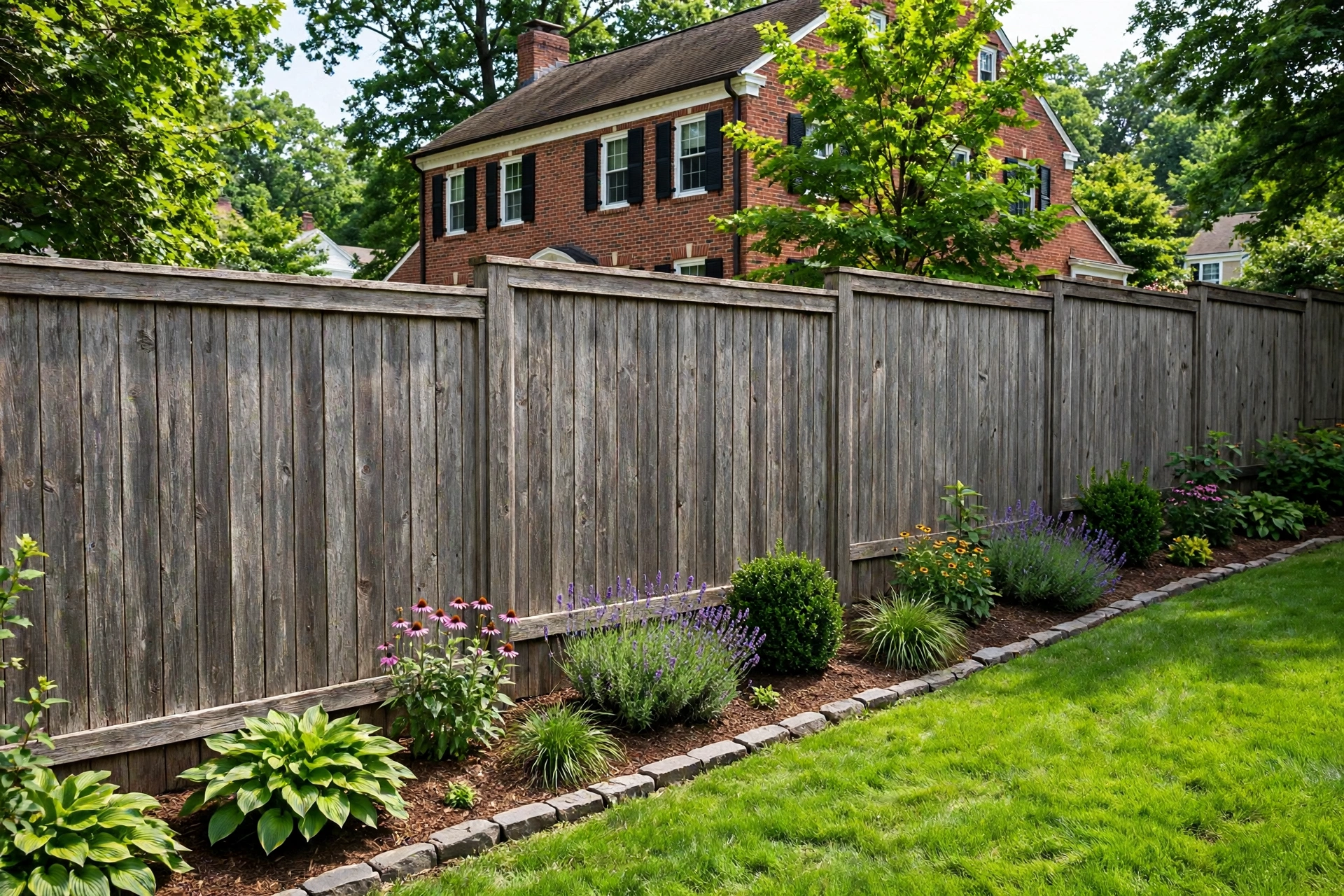
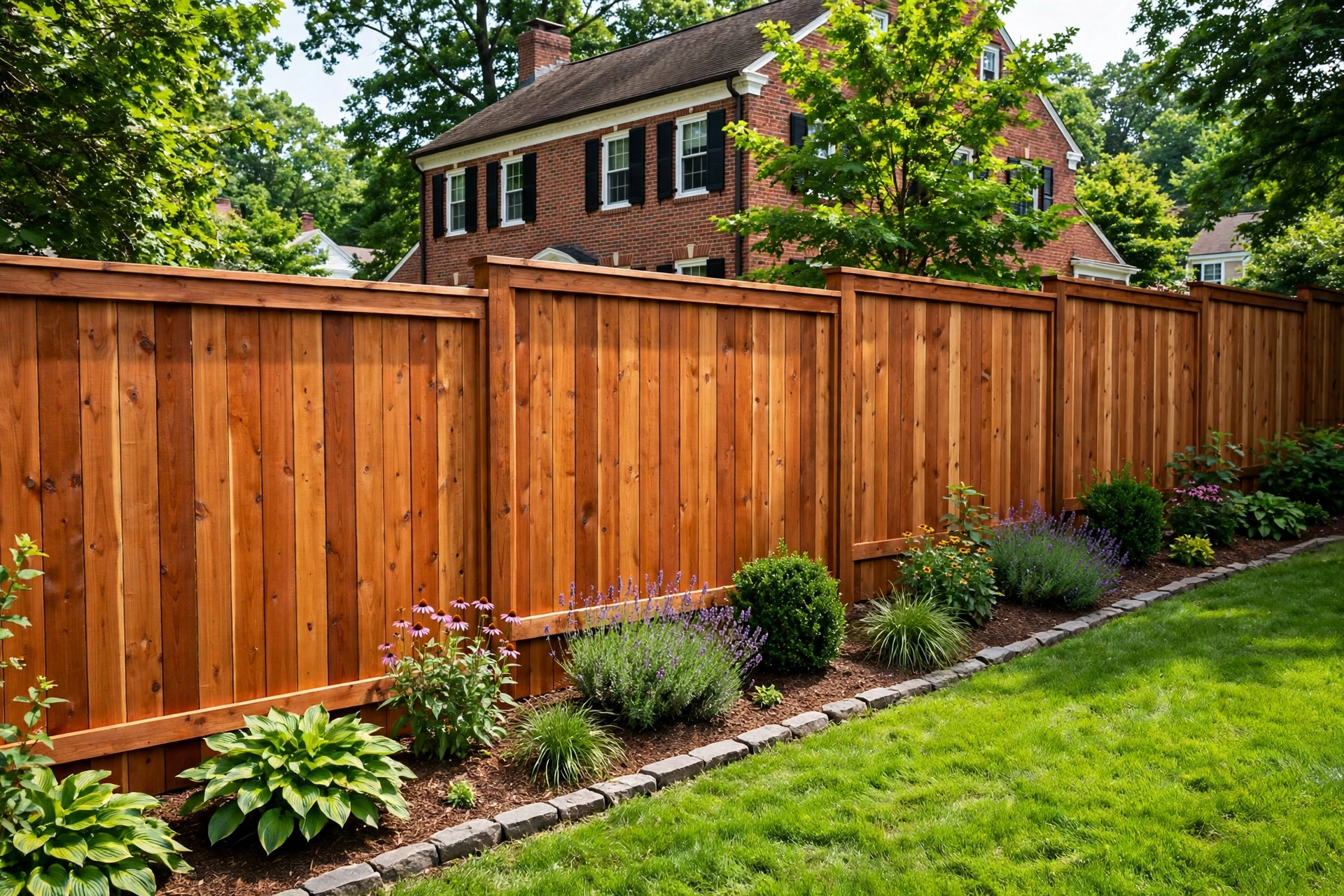
A privacy fence in Old Town Bowie had silvered across its sun exposed runs while the shaded rear section carried mildew along the bottom boards. We washed the full length, treated the mildew band, and sanded the roughest pickets where grain had raised. Two soft boards near a gate post were replaced before staining began. A semi transparent stain was applied to both faces, with the gate coated last so it could stay open while drying.
Planning figures here come from published figures, labeled as such, because no Bowie company publishes a local price list. Published figures put fence staining at $590 to $1,580 for a typical residential fence, covering washing, prep, and stain on the agreed faces. Published guides put full exterior painting on a roughly 1,700 square foot home at $4,015 to $7,063, a far larger surface than any fence.
Length drives the number first. Height, gate count, and whether one face or two are in scope move it next. Mildew treatment, board replacement, and dense shrubs that must be worked around push the figure higher. Your exact price follows a walk of the full fence line.
Vegetation gets attention before the washer starts. Branches touching the fence are noted, and ground cover at the base is pushed back where owners allow. Washing removes the grey surface film and mildew, then the wood rests until it is dry through, not just dry on top.
Application follows the grain, board by board, working stain into checks and end grain at picket tops where rain enters. At the end, gates are swung and latched several times to confirm nothing sticks.
Published figures put fence staining at $590 to $1,580 for a typical residential fence. Length, height, gate count, and whether both faces are included set the position inside that range. Walking your fence line settles the exact quote.
Both faces weather, so both benefit. Staining only the yard side leaves the outer face to grey on its own schedule.
Sun exposed runs fade sooner, while shaded runs gather mildew earlier. Most fences show first clear wear along the bottom boards and the gate. Watching those spots tells you when a fresh coat is due.
Yes, with the right product choice. Newer boards take stain darker at first, and a solid stain or adjusted application can pull the run together. We flag boards likely to read differently before the first coat.
Growth touching the fence holds moisture against the wood and blocks even application. Light trimming back from the boards is usually enough. We flag the spots needing clearance at the visit.
Rotted boards get replaced before staining, because coating them only colors the damage. New boards are stained with the rest of the run so the repair blends in.
Tell us what you want painted. We read every request that comes in and respond with the published range for that kind of work and the next step, starting with a visit to measure the surfaces and talk through prep and colors.
Prefer to talk it through first? Send the form and we will call you back at the number you give us.