Bowie, Maryland
Interior Painting in Bowie, MD
Interior Painting in Bowie, Maryland, with published price ranges up front, the surfaces measured and the prep scope settled on site, and one written figure before any work begins.
Bowie, Maryland
Interior Painting in Bowie, Maryland, with published price ranges up front, the surfaces measured and the prep scope settled on site, and one written figure before any work begins.
We paint interiors across Bowie, from single rooms that need a clean color change to full floors where walls, ceilings, and trim all move together. A good interior job is mostly preparation done out of sight. Floors get covered, furniture gets moved or masked, small nail holes and seam cracks get filled, and only then does paint go on the wall.
Homes here ask for different things room by room. A Belair colonial might carry original 1960s trim profiles and plaster patches that telegraph through a fresh coat if they are not leveled first. A newer Fairwood build might have tall, open walls that show every roller lap in afternoon light. Chapel Forge, Woodmore, and the older streets near Belair each present their own mix of drywall, trim, and ceiling height, and we scope the work by walking the rooms, not by guessing from a floor plan.
Interior painting covers walls, ceilings, trim, doors, and built in surfaces that belong to the room. Most projects start with walls alone. Others add ceilings that have yellowed, baseboards and crown that have taken scuffs, or interior doors that no longer match a new wall color. Stairwell walls and two story foyers belong in this category too, and they need staging and ladder work planned before the first coat.
Kitchens and bathrooms need closer attention than bedrooms. Cooking film settles on kitchen walls and cabinets nearby, and bathroom moisture leaves faint staining and soft spots around fans and showers. Those surfaces get cleaned and checked before painting, because paint applied over grease or damp drywall will fail early no matter how good the top coat looks on day one.
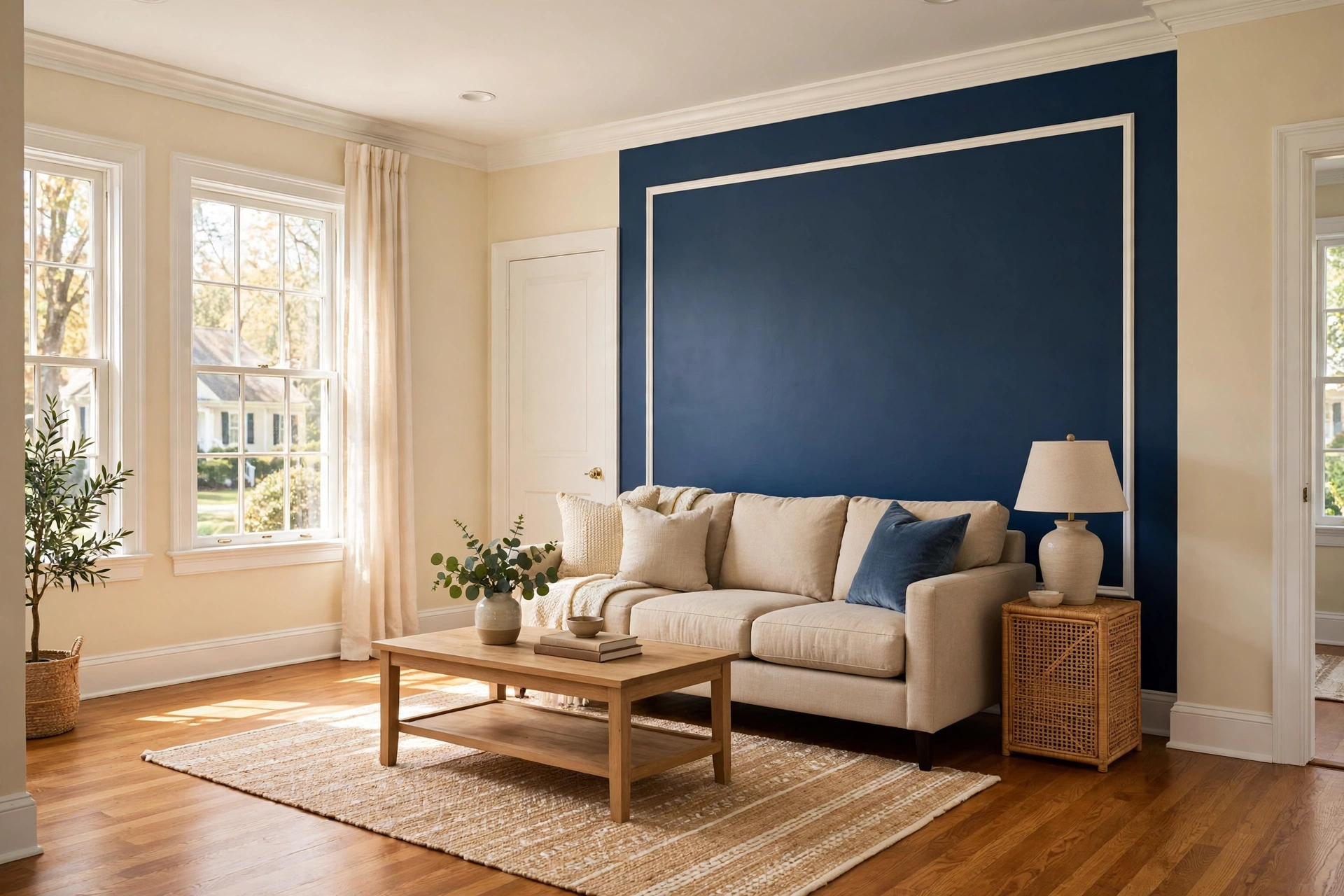
Living areas carry a different problem. Light changes across the day. A color that reads warm in morning sun off the front windows can turn flat by evening under lamps. We talk through sheen as part of the scope for that reason. Flat and matte finishes hide minor wall flaws in bedrooms and ceilings. Eggshell and satin hold up better where hands, bags, and chair backs touch the wall every day.
Preparation sets the result. We protect floors and fixed surfaces, remove switch plates, fill minor holes, sand patches smooth, and caulk gaps where trim meets the wall. Larger drywall damage gets flagged in the scope plainly. It can be repaired as part of the job where that is included, but it is not hidden under paint and called finished.
Primer has a specific job. It seals patched areas so they do not flash through the finish, it helps a strong color change cover in fewer coats, and it gives new drywall an even base. Not every wall needs a full prime coat. Previously painted walls in sound condition often need spot priming only, and we say which approach a room is getting before work starts.
Application follows the room. Ceilings go first, then walls, then trim, so drips and lap lines move in the right direction. Corners get cut in by brush, open walls get rolled for an even texture, and trim gets a smoother finish suited to its narrower profile. Between coats we check the work in daylight where the room allows it, because flaws that hide under a work light show up fast once normal light returns. Doors are painted so edges and faces match, and hardware is removed or masked rather than painted over.
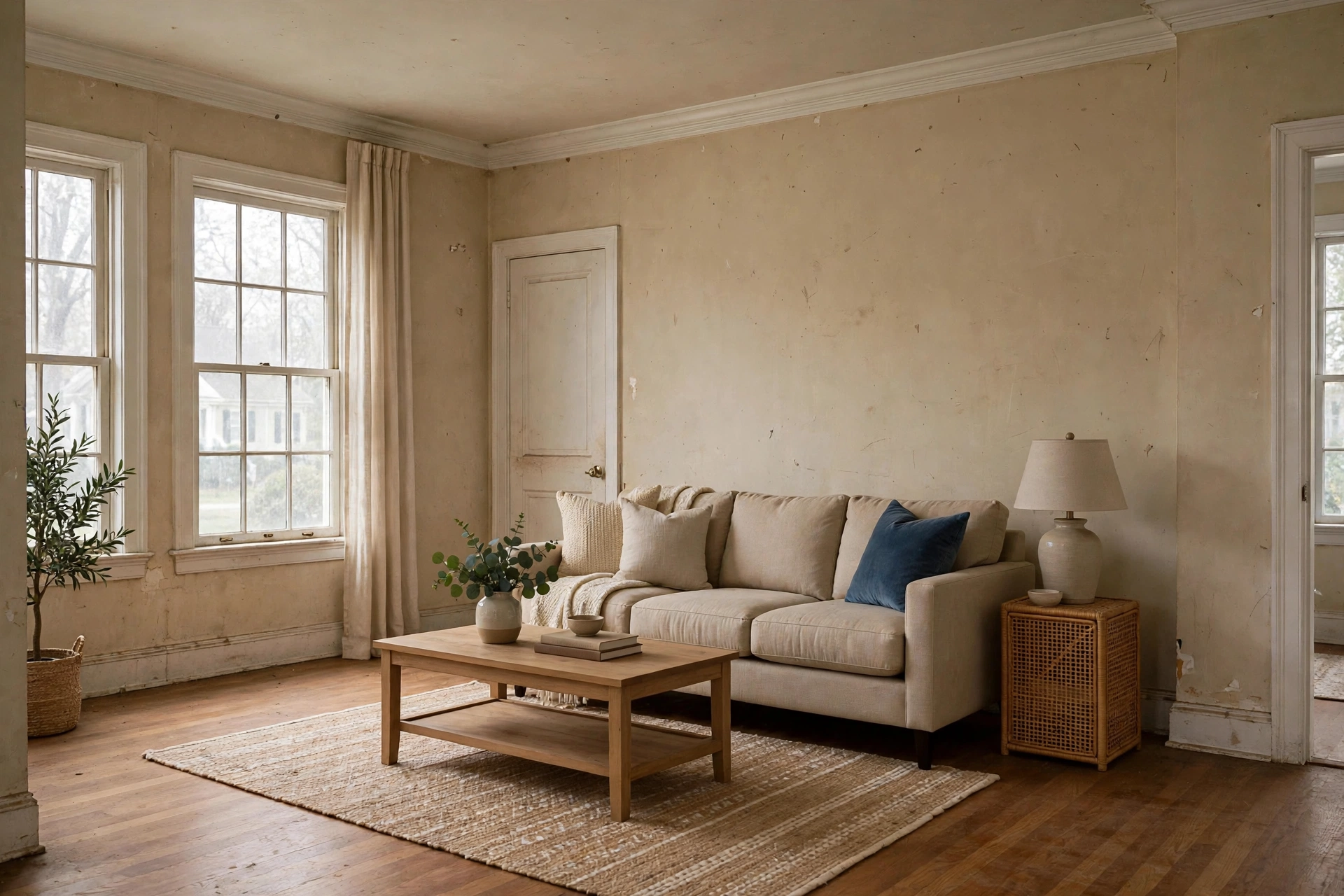
A Chapel Forge colonial needed its main floor repainted across the living room, dining room, hallway, and stairwell wall. Years of picture holes, a long seam crack above the stairs, and trim that had yellowed against newer wall color were the main problems found on the walk through. We filled and sanded the patches, spot primed the repairs, repainted the ceilings, walls, and trim in sequence, and finished the stairwell wall with staging set for its full height.
No Bowie company publishes a local price list, so the figures here come from published guides and are labeled as published figures to help you plan. Published figures put interior painting at $2 to $6 per square foot. Published guides also put whole house painting at $4,100 to $7,300, which gives added context for a full interior scope. For this service, most Bowie projects we scope fall in a band of $2,800 to $6,400.
Where a job lands depends on square footage actually painted, ceiling height, and how much trim and how many doors are included. Prep moves the figure too. Walls in sound condition with a similar color going over them sit lower. Heavy patching, strong color changes that need primer and extra coverage, and tall stairwell or foyer walls sit higher. Your firm figure comes after the rooms have been seen and measured in person.
Samples belong on the wall, not only on a small card. A card viewed at a store counter tells you very little about a north facing bedroom in an older Bowie lot with heavy tree cover, where daylight stays cool and shaded for much of the day. Two sample patches on different walls of the same room, checked morning and evening, prevent most surprises.
Finish choice is practical, not decorative trivia. Bathrooms and laundry areas benefit from finishes that tolerate moisture and wipe clean. Hallways and stairwells take contact, so a slightly higher sheen holds up better there than it would in a quiet bedroom. Trim usually carries a contrast in both color and sheen, which is why older trim that has yellowed can make even a fresh wall color look tired until the trim is done as well.
We also talk through order if you are painting in stages. Public rooms first gives the fastest visible change. Bedrooms in stages lets a household keep sleeping space intact. Either path works, as long as hallways and shared walls are planned so a later stage does not leave a hard line where two phases meet.
Published figures put interior painting at $2 to $6 per square foot, and most Bowie projects for this service fall in a band of $2,800 to $6,400. Room size, ceiling height, trim and door count, and prep needs set your place inside that band. The visit produces your firm figure once the rooms have been measured.
No. Walls alone are a common scope. Ceilings and trim get added when they have yellowed, stained, or no longer match the new wall color, and many homeowners add them after seeing how tired they look beside fresh walls.
Floors and fixed surfaces are covered before work starts, and furniture is moved away from walls or masked in place depending on the room. The scope walk covers access and protection so there are no surprises on the first morning.
Patches that are filled, sanded, and spot primed should blend with the surrounding wall. Skipping primer is the usual reason a repair flashes through a finish coat, which is why priming patches is a standard step in our process.
A single room can take a day or two including prep and drying between coats. A main floor or several rooms together takes longer, and tall stairwell or foyer walls add time for staging. The scope gives a schedule based on the rooms included.
Often yes, if the surface is prepared and primed where the change demands it. Deep reds, dark blues, and very light colors going over dark walls sometimes need added coverage, and that is stated in the scope after the existing colors have been seen.
Tell us what you want painted. We read every request that comes in and respond with the published range for that kind of work and the next step, starting with a visit to measure the surfaces and talk through prep and colors.
Prefer to talk it through first? Send the form and we will call you back at the number you give us.